



QZK RAT 2026 (1 Viewer)

Currently reading:
 QZK RAT 2026 (1 Viewer)

Recently searched:

BIGDOG

Member
Amateur
LV
3
Joined
Jul 8, 2022
Threads
112
Likes
116
Awards
9
Credits
7,455©
Cash
0$
E-Cash
0.00$
feature-image-2.png


QZK RAT 2026


QZK RAT 2026 is a next-generation modular Remote Access Trojan (RAT) designed for cybercrime operations including remote surveillance, ransomware deployment, cryptocurrency theft, hidden mining, and credential harvesting. Unlike traditional malware, QZK RAT 2026 combines multiple attack modules into a single management dashboard, allowing attackers to control infected systems remotely while remaining highly stealthy. Security researchers consider it a dangerous multi-functional malware framework due to its advanced persistence, evasion, and monetization capabilities.
QZK RAT 2026 Feature List
Remote Access Control: Full remote system monitoring and administration capabilities.
Password Recovery: Steals saved browser credentials and authentication data.
Remote Desktop Monitoring: Allows attackers to view and control victim desktops remotely.
Microphone Access: Enables hidden audio recording from infected devices.
Webcam Surveillance: Provides unauthorized access to victim webcams.
Keylogger: Captures keystrokes including passwords and sensitive communications.
Crypto Clipper: Replaces copied cryptocurrency wallet addresses for financial theft.
xmr-miner-1-1024x589.webp

Hidden Crypto Miner: Uses victim hardware resources for silent cryptocurrency mining.
ransomware-1024x539.webp

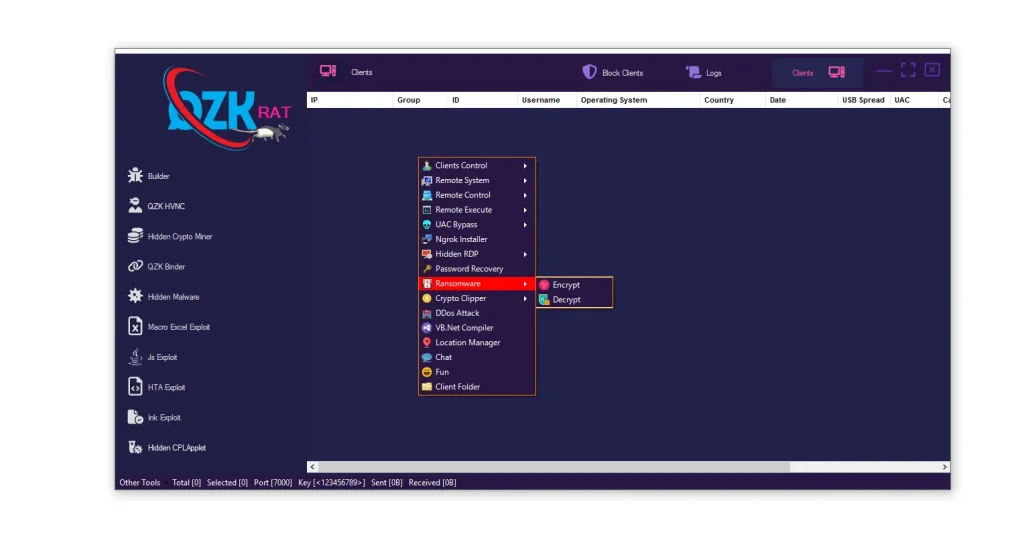
Ransomware Module: Encrypts files and supports extortion-based attacks.
binder-1024x526.webp

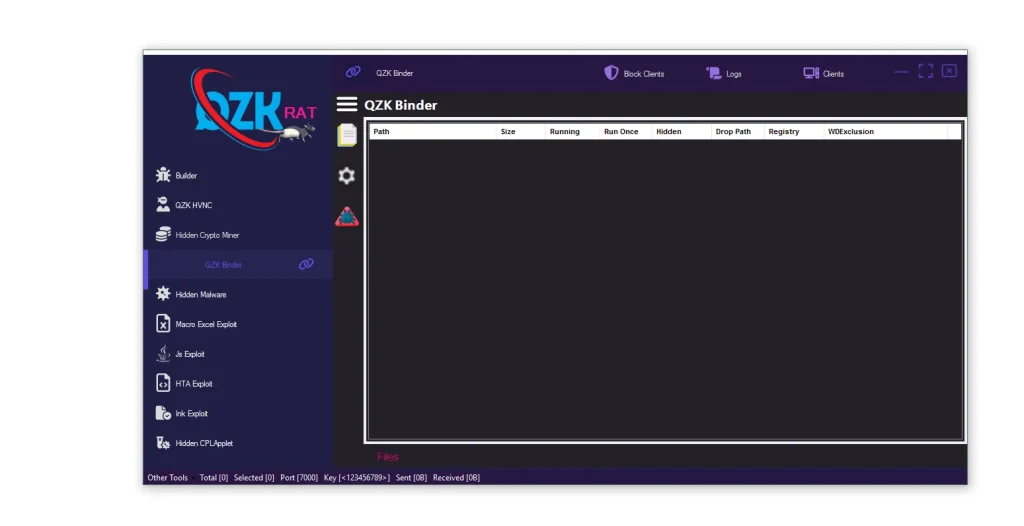
QZK Binder: Combines malware with legitimate-looking files for stealth delivery.
HTA Exploit Builder: Creates malicious HTA payloads capable of executing scripts on Windows.
js-exploit-1024x553.webp

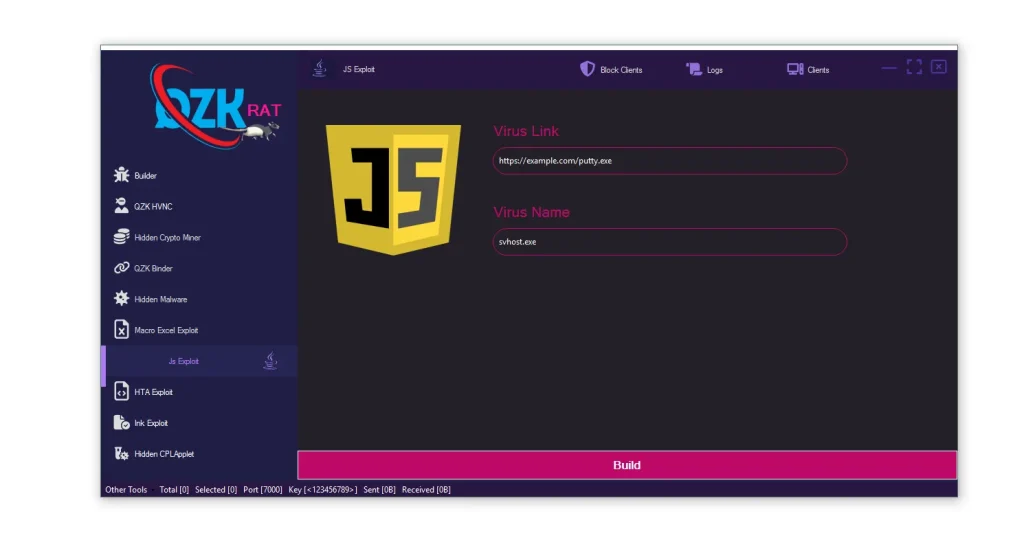
JS Exploit Builder: Generates JavaScript-based malware delivery payloads.
link-exploit-1024x558.webp

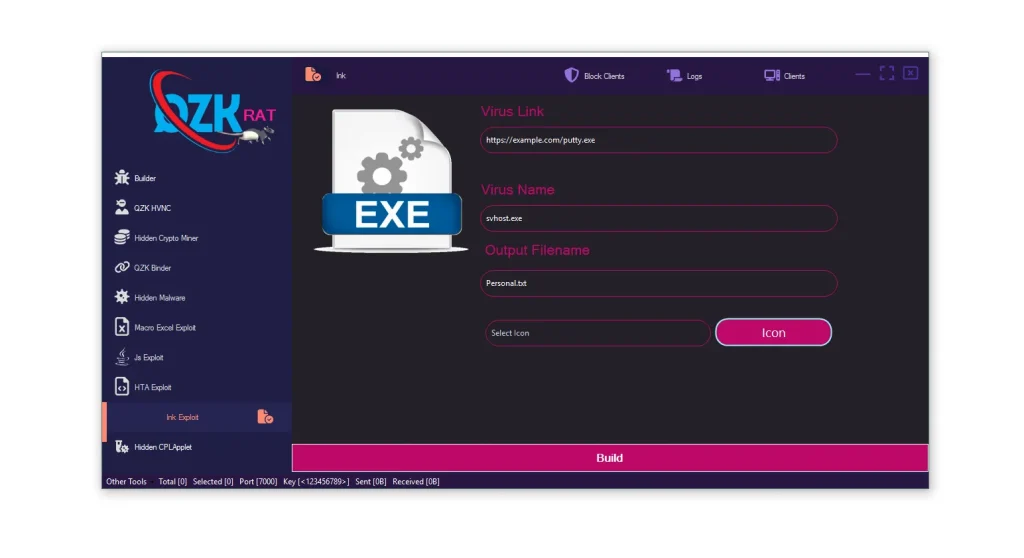
Ink Exploit (LNK Exploit): Uses malicious shortcut files to execute hidden commands.
macro-exploit-1024x562.webp

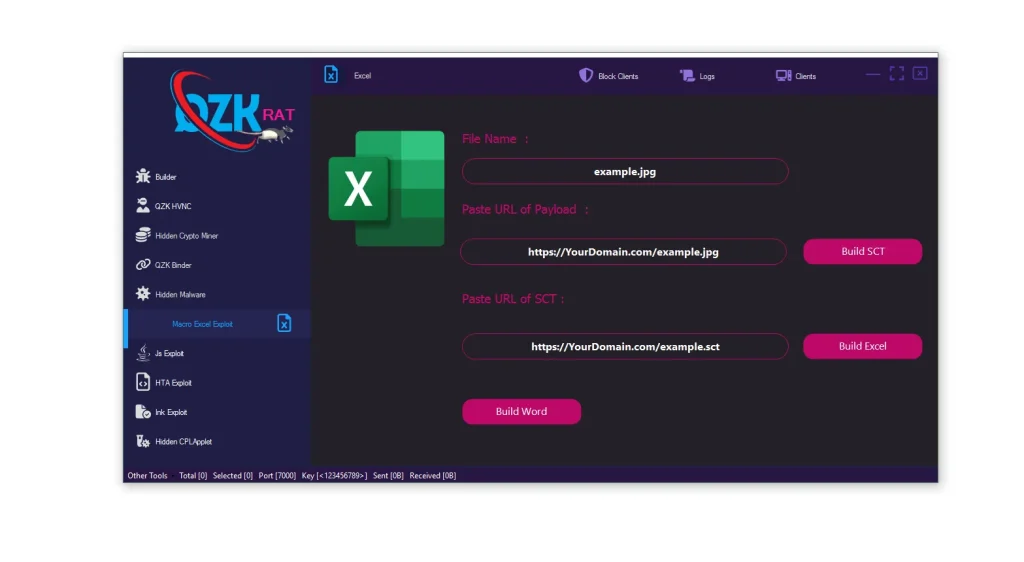
Macro Excel Exploit: Builds weaponized Microsoft Office documents using macro-based delivery.
UAC Bypass: Attempts to gain elevated administrative privileges silently.
Persistence Mechanisms: Maintains long-term access through registry and startup modifications.
USB Spread: Propagates malware through removable storage devices.
Location Tracking: Identifies victim regions and geographic information.
Remote Execute: Executes commands and payloads remotely on infected systems.
File Manager: Uploads, downloads, and deletes files remotely.
Remote Shell Access: Provides command-line control over compromised devices.
Firewall Manipulation: Attempts to weaken or disable Windows security protections.
Behavioral Stealth Features: Uses hidden execution and obfuscation techniques to avoid detection.
Centralized Dashboard: Manages infected clients from a single command-and-control interface.
Hidden RDP / HVNC: Allows invisible remote desktop sessions without user awareness.
Client Tracking System: Organizes infected devices by country, operating system, and status.
Antivirus Evasion: Includes obfuscation and assembly modification features to bypass detection.


Link:

Feature image
 
  • Like
Reactions: tiffani111

ddsso11111

Member
LV
0
Joined
May 12, 2026
Threads
0
Likes
0
Credits
1,021©
Cash
0$
E-Cash
0.00$
feature-image-2.png


QZK RAT 2026


QZK RAT 2026 is a next-generation modular Remote Access Trojan (RAT) designed for cybercrime operations including remote surveillance, ransomware deployment, cryptocurrency theft, hidden mining, and credential harvesting. Unlike traditional malware, QZK RAT 2026 combines multiple attack modules into a single management dashboard, allowing attackers to control infected systems remotely while remaining highly stealthy. Security researchers consider it a dangerous multi-functional malware framework due to its advanced persistence, evasion, and monetization capabilities.
QZK RAT 2026 Feature List
Remote Access Control: Full remote system monitoring and administration capabilities.
Password Recovery: Steals saved browser credentials and authentication data.
Remote Desktop Monitoring: Allows attackers to view and control victim desktops remotely.
Microphone Access: Enables hidden audio recording from infected devices.
Webcam Surveillance: Provides unauthorized access to victim webcams.
Keylogger: Captures keystrokes including passwords and sensitive communications.
Crypto Clipper: Replaces copied cryptocurrency wallet addresses for financial theft.
xmr-miner-1-1024x589.webp

Hidden Crypto Miner: Uses victim hardware resources for silent cryptocurrency mining.
ransomware-1024x539.webp

Ransomware Module: Encrypts files and supports extortion-based attacks.
binder-1024x526.webp

QZK Binder: Combines malware with legitimate-looking files for stealth delivery.
HTA Exploit Builder: Creates malicious HTA payloads capable of executing scripts on Windows.
js-exploit-1024x553.webp

JS Exploit Builder: Generates JavaScript-based malware delivery payloads.
link-exploit-1024x558.webp

Ink Exploit (LNK Exploit): Uses malicious shortcut files to execute hidden commands.
macro-exploit-1024x562.webp

Macro Excel Exploit: Builds weaponized Microsoft Office documents using macro-based delivery.
UAC Bypass: Attempts to gain elevated administrative privileges silently.
Persistence Mechanisms: Maintains long-term access through registry and startup modifications.
USB Spread: Propagates malware through removable storage devices.
Location Tracking: Identifies victim regions and geographic information.
Remote Execute: Executes commands and payloads remotely on infected systems.
File Manager: Uploads, downloads, and deletes files remotely.
Remote Shell Access: Provides command-line control over compromised devices.
Firewall Manipulation: Attempts to weaken or disable Windows security protections.
Behavioral Stealth Features: Uses hidden execution and obfuscation techniques to avoid detection.
Centralized Dashboard: Manages infected clients from a single command-and-control interface.
Hidden RDP / HVNC: Allows invisible remote desktop sessions without user awareness.
Client Tracking System: Organizes infected devices by country, operating system, and status.
Antivirus Evasion: Includes obfuscation and assembly modification features to bypass detection.


Link:
* Hidden text: cannot be quoted. *

View attachment 306459
❤️❤️❤️❤️
 

Create an account or login to comment

You must be a member in order to leave a comment

Create account

Create an account on our community. It's easy!

Log in

Already have an account? Log in here.

Tips
Recently searched:

Similar threads

Users who are viewing this thread

Top Bottom